
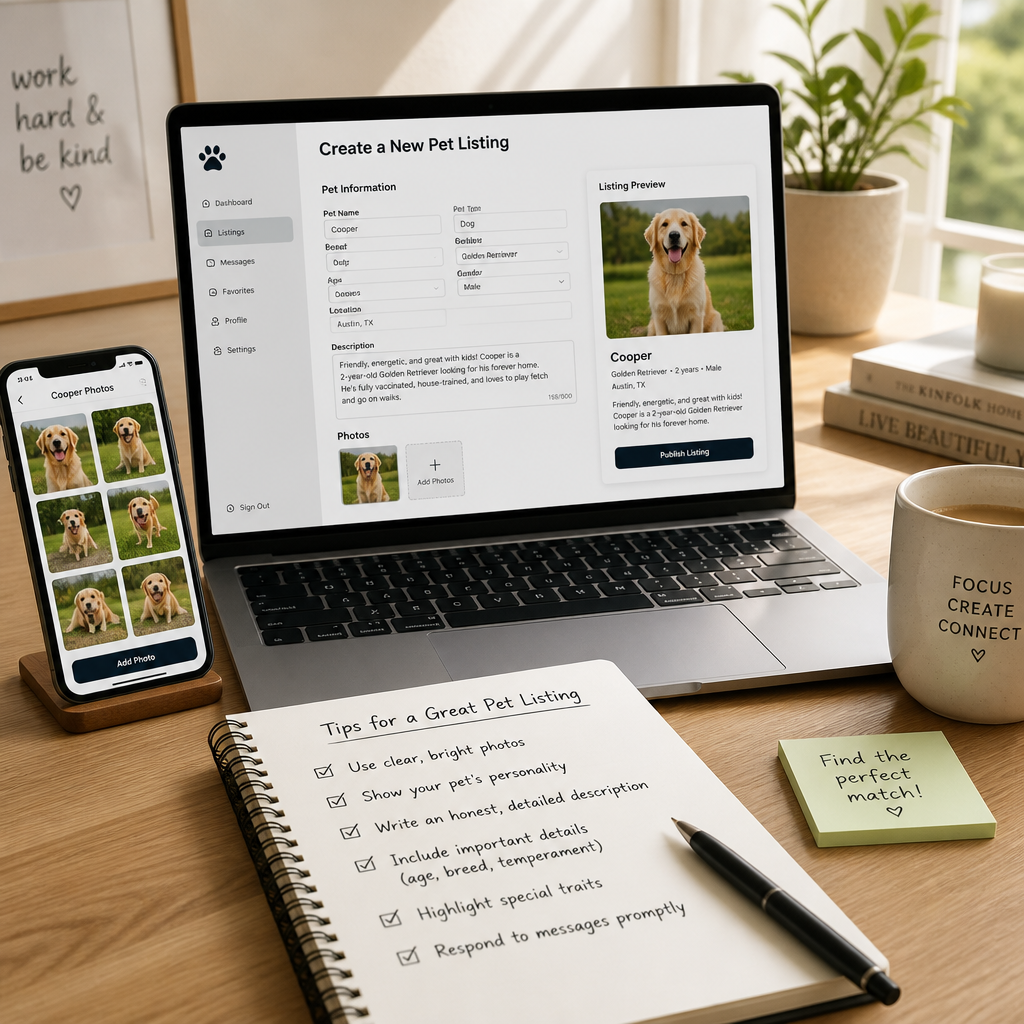
Most pet listings in Australia get ignored, and the reason is almost never the pet. It's the listing. A blurry photo, a three-word title, and a price with no context tell a prospective buyer or adopter nothing they need to know and give them no reason to click. If you've posted a pet on any Australian marketplace and heard nothing but silence, the problem is fixable. These pet listing tips Australia sellers and rehomers actually use will walk you through every element that turns a skipped listing into a flooded inbox.
Table of Contents
- Quick Takeaways
- Why Most Pet Listings Fail Before Anyone Reads Them
- Writing a Title That Stops the Scroll
- Photos That Do the Selling for You
- Crafting a Description That Builds Trust
- Pricing and Rehoming Fees: How to Position Your Listing
- Compliance and Safety: What Australian Sellers Must Include
- Comparing Listing Approaches on Australian Pet Platforms
- Frequently Asked Questions
- References
Quick Takeaways
| Key Insight | Explanation |
|---|---|
| Your title must include breed, age, and one compelling trait | Generic titles like "Dog for sale" get scrolled past. Specific titles like "Playful 8-week Cavoodle, vet checked, family raised" immediately filter in the right buyers. |
| Natural light photos outperform dark indoor shots every time | Buyers form their first impression in under two seconds. A well-lit photo of a clean, happy pet signals responsible ownership before a single word is read. |
| Personality description converts better than a spec sheet | Listing health stats is necessary, but describing how the pet behaves, what it loves, and what kind of home it suits is what makes someone pick up the phone. |
| State-based microchip and registration requirements are not optional | In Victoria, a microchip number must appear in the advertisement. South Australia requires a breeder registration number. Missing these details flags your listing as non-compliant and erodes buyer trust immediately. |
| A rehoming fee signals the pet's value and filters out bad-faith enquiries | Listings with zero price attract opportunistic or unserious enquiries. A reasonable rehoming fee, even for rescue pets, demonstrates the animal is valued and attracts genuinely committed adopters. |
| Responding fast matters more than most sellers realise | Australian pet buyers are often enquiring across multiple listings at once. The first seller to respond with a warm, specific reply almost always wins the placement. |
| Naming the pet's ideal home converts fence-sitters | Describing the right match ("best suited to a quiet home with a yard, no young children") helps genuinely suitable buyers self-select, which reduces time-wasters and failed placements. |
Why Most Pet Listings Fail Before Anyone Reads Them
A listing that gets no responses is not a sign of low demand. Australia's appetite for pets is strong across dogs, cats, fish, and aquatic species. The failure is almost always structural. Buyers and adopters are making snap decisions based on a thumbnail image and a title. If either of those elements undersells the animal, the listing is dead before it starts.
The second most common failure is listing descriptions that read like a warranty card. Age, weight, vaccination status, date of birth. Necessary, yes. Sufficient, no. The person looking at your listing is imagining that animal in their lounge room, sleeping on their couch, greeting their kids at the door. If your description does not help them build that picture, they move on to the next listing that does.
The third failure is invisible but serious: missing compliance information. Several Australian states now require specific details in pet listings, including microchip numbers and breeder registration or source numbers. Listings without these details look suspicious to informed buyers, and on well-run platforms like MateLoop, they also risk being flagged or removed. Getting the basics right is not just about trust. In some states, it is the law.
Describe what the pet's current routine looks like. When does it eat? How does it handle being alone? Is it crate trained? What commands does it know? These details are not padding. They are the reassurances a cautious buyer needs to move from interested to committed.
Pricing and Rehoming Fees: How to Position Your Listing
Pricing is one of the most mishandled elements of Australian pet listings. Sellers either list no price (which creates friction and delays responses) or price without context (which creates suspicion). Both approaches cost you enquiries.
If you are selling a pet, include the price in the listing. If it reflects what you have spent on health checks, vaccinations, microchipping, and quality care, say so briefly. "Price reflects full vet check, C5 vaccination, microchipping, and 8 weeks of quality nutrition" contextualises the number and heads off the inevitable low-ball message.
For rehoming listings, a reasonable rehoming fee is a genuine deterrent to bad-faith enquiries. A pet offered for free can attract buyers with no intention of providing proper care. A fee, even a modest one, signals that the animal has value and that you are taking the placement seriously. State clearly that the fee is a rehoming contribution, not a profit, and explain what it covers if relevant.
For aquatic pets and live plants, be transparent about the replacement or acquisition cost of the specimen. Rare fish and shrimp, high-quality live plants, and specialist aquatic setups have established market values. Price with reference to that context, and buyers who know the market will respond confidently.
Compliance and Safety: What Australian Sellers Must Include
Australia's pet sale regulations vary by state and territory, but the direction of travel is clear: more transparency, more traceability, and more accountability. Sellers who understand this come across as professional. Sellers who ignore it expose themselves to complaints, platform removal, and in some cases, legal risk under Australian Consumer Law.
Microchip and registration requirements
In Victoria, the microchip number of any dog or cat being advertised for sale must appear in the advertisement. Registered businesses such as pet shops, shelters, or breeders can use their council-registered premises number alongside the issuing council's name. In South Australia, a breeder registration number is compulsory in any advertisement for puppies or kittens. Victoria also introduced its Pet Exchange Register, which requires "source numbers" alongside microchip numbers in all advertisements. Check your state's current requirements before posting.
Regardless of which state you are in, including a microchip number in your listing on MateLoop signals legitimacy. Informed buyers check chip numbers before they arrange a viewing, and a listing that makes this easy receives more serious enquiries than one that does not.
Protecting yourself from scam buyers
Scam activity runs in both directions on pet marketplaces. Sellers should be cautious of buyers who seem disinterested in the animal's history, temperament, or care needs, or who push to transact entirely by bank transfer without meeting in person. A genuine buyer will ask questions and show interest in the animal's wellbeing. Always meet a prospective buyer in person before any transaction is completed. If a meeting is not possible, arrange a video call so you can verify both the buyer and their environment.
Pro tip: Get the buyer's phone number and call them before confirming a sale. A brief phone conversation tells you more about intent than any number of messages. It also confirms they are a real person in Australia, which filters out the most common scam approaches immediately.
Comparing Listing Approaches on Australian Pet Platforms
Not all listing styles suit all platforms. The approach that works on a broad classifieds site is not the same approach that works on a pet-specific marketplace. Understanding the difference helps you tailor your listing for maximum response.
| Approach | Best Suited For | Key Strength and Limitation |
|---|---|---|
| Minimal listing (title, price, one photo) | Broad classifieds platforms with high volume | Quick to post, but attracts unqualified enquiries. No trust signals. Works only when demand is very high and supply is very low. |
| Full narrative listing (personality, routine, ideal home, compliance details, multiple photos) | Pet-specific platforms like MateLoop and adoption directories | Takes more time to write but self-selects for serious buyers and adopters. Dramatically reduces time-wasting messages and failed viewings. |
| Rescue-style profile (emotional story, behavioural notes, matching criteria, adoption process explained) | Rehoming and adoption listings on any platform | Converts emotionally engaged browsers into committed adopters. Requires honest, specific language. Fails if it reads as marketing copy rather than a genuine account. |
The full narrative listing approach consistently outperforms the minimal listing on dedicated pet platforms. Buyers visiting MateLoop are not general classifieds browsers. They are specifically looking for a pet, and they are comparing multiple listings simultaneously. The listing that tells the most complete, honest story about the animal wins the enquiry almost every time.
Frequently Asked Questions
How long should a pet listing description be?
Aim for 150 to 300 words for the description body. Long enough to cover personality, health status, ideal home, and any relevant compliance information. Short enough that a busy person reads it fully. Bullet points work well for the factual checklist (vaccinated, microchipped, desexed, wormed) so you can keep the prose focused on personality and story.
What is the biggest mistake sellers make when listing pets online in Australia?
Using only one photo, and making it a dark or blurry indoor shot. Photos are the entry point to every listing. A single poor-quality image communicates that the seller is either unorganised or unaware of how the listing looks from the outside. Both interpretations reduce enquiries. Use at least three photos, taken in natural light, from different angles.
Do I need to include the microchip number in a pet listing in Australia?
It depends on your state. Victoria requires it for all dog and cat advertisements, and also requires source numbers for registered businesses. South Australia requires a breeder registration number for puppy and kitten listings. Even where it is not legally required, including the microchip number adds significant credibility to your listing and signals to buyers that the animal's history is traceable and legitimate.
Is it better to list a pet for free or charge a rehoming fee?
Charge a rehoming fee. Free listings attract a much higher proportion of unserious or bad-faith enquiries. A fee, even a modest one, signals that you take the placement seriously and that the animal has been cared for. It also helps filter out people who are seeking pets for resale or other inappropriate purposes. State what the fee covers and make clear it is a rehoming contribution, not a commercial transaction.
How do I make my pet listing stand out from Gumtree or Trading Post listings?
List on a platform built specifically for pets, like MateLoop, where your listing is seen by an audience already committed to finding a pet rather than browsing general classifieds. Then invest in a full narrative description, multiple high-quality photos, and honest compliance details. The combination of the right platform and a genuinely informative listing is what separates your ad from the generic clutter on general classifieds sites.
What should I do if I get no responses after a week?
Revisit the title first. Is it specific enough? Does it include breed, age, and a compelling detail? Then look at your lead photo. Is it well-lit and clear? If both look good, re-read the description and ask whether someone unfamiliar with the animal would finish reading it feeling excited to enquire. If the answer is no, rewrite the description to lead with personality rather than a list of facts. Refresh the listing on the platform if that option is available, which can push it back toward the top of search results.
Can I list aquatic pets and live plants the same way as dogs and cats?
The structure is similar but the emphasis shifts. Aquatic buyers tend to be more technically informed, so species-specific details, tank compatibility, and care requirements matter more than personality descriptions. Clear, well-lit photos of the specimen in clean water are non-negotiable. Pricing with reference to established market values for that species or plant variety helps buyers understand the listing immediately without needing to negotiate from scratch.
Have you recently listed a pet in Australia? Share what worked for you or what you wish you'd known before posting, in the comments below.
References
- PetRescue guide to writing an effective pet adoption profile for Australian listings
- Western Australia Consumer Protection advice for buying and selling pets online
- Walkerville Vet guide to identifying and avoiding puppy scams in Australia
- SBS News analysis of online pet sale regulation across Australian states
- Tails Australia safety tips for meeting breeders and adopting pets safely
General pet care information for Australia. Always follow your veterinarian’s advice for your individual pet.