
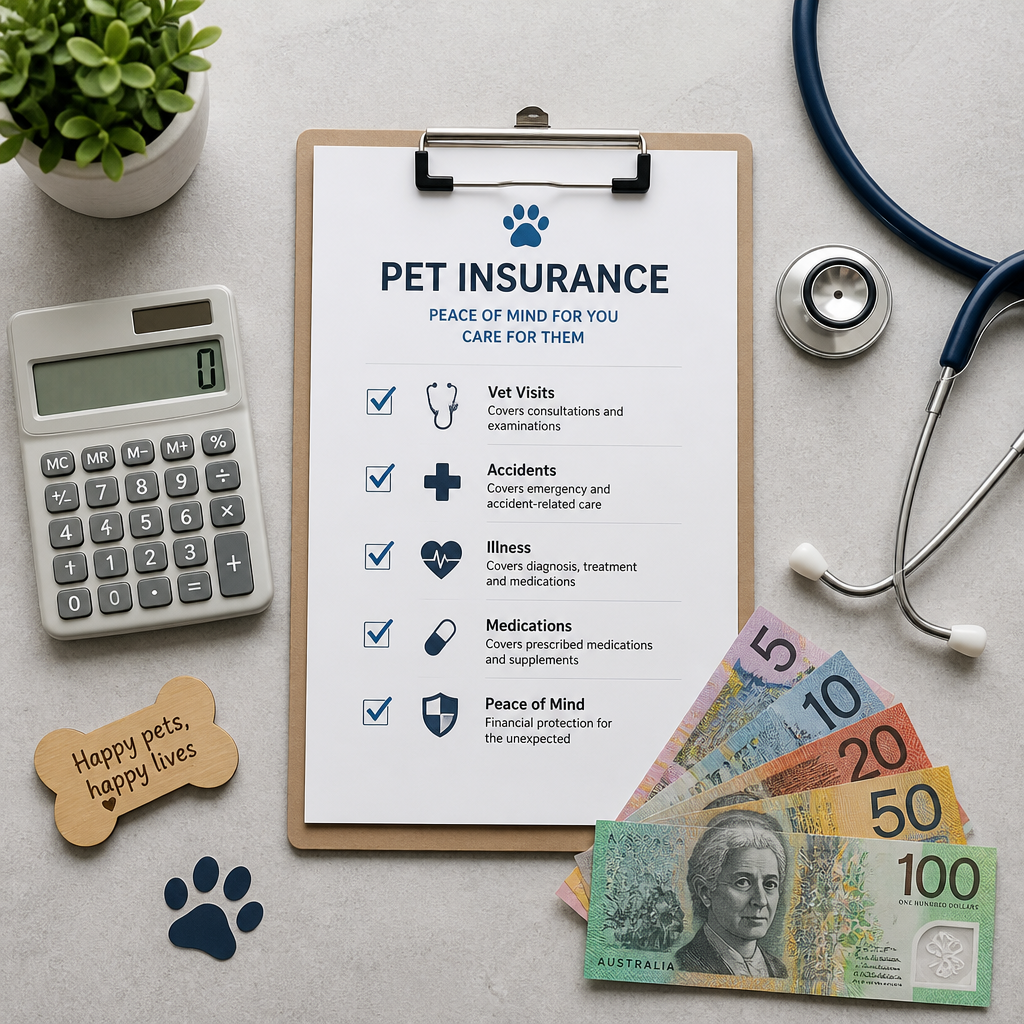
A single emergency vet visit in Australia can cost anywhere from $300 to over $5,000, and that bill arrives with zero warning. Yet the majority of Australian pet owners still have no insurance in place. If you are browsing dogs or cats on MateLoop right now, or if you have recently adopted or purchased a pet, the question of pet insurance Australia is one you need to settle before your new companion ever sets a paw inside a vet clinic. This guide cuts through the marketing noise and gives you a straight answer on whether a policy is worth paying for, what the coverage gaps actually look like, and how to decide without guessing.
Table of Contents
- What Pet Insurance Actually Covers in Australia
- How Much Does Pet Insurance Cost?
- The Real Vet Bills You Are Protecting Against
- What Is Not Covered: The Exclusions That Catch Owners Off Guard
- Dog Insurance Australia: Breed, Age, and Why It Matters
- Cat Insurance Australia: Is It Actually Worth It for Cats?
- Comparing the Three Main Types of Pet Insurance Cover
- So Is Pet Insurance Worth It? An Honest Assessment
- Frequently Asked Questions
- References
What Pet Insurance Actually Covers in Australia
Australian pet insurance has evolved significantly. Prior to 2019, there were only two major companies offering policies in Australia, but the market has since expanded with dozens of providers competing for your premium dollar. That competition has improved options, but it has also made comparisons harder.
Most policies sold today fall into three broad categories: accident-only, accident and illness, and comprehensive (sometimes called wellness or gold-level) cover. Accident and illness is the most common choice and covers the scenarios most likely to drain a bank account: surgery after a car accident, treatment for cancer, management of diabetes, or emergency hospitalisation for a gastrointestinal blockage.
Benefit caps apply to most policies, so you need to check the annual limit on benefits your insurer will pay. For example, a procedure might cost $2,000 but your insurer will only cover $500 depending on how sub-limits are structured. Reading the Product Disclosure Statement (PDS) before you sign is not optional. It is the only reliable way to know what you are actually buying.
Pro tip:
Pro tip: Always compare the annual benefit limit, not just the monthly premium. A cheap policy with a $2,000 annual cap provides almost no protection for anything serious.
Dog Insurance Australia: Breed, Age, and Why It Matters
Dog insurance Australia is not a uniform product. Two dogs of the same age living in the same suburb can attract very different premiums based purely on breed. Giant dogs cost over 40% more to insure than smaller breeds because their treatments cost more, their surgeries are more complex, and their lifespans tend to be shorter, meaning claims often cluster in a compressed window.
Breeds predisposed to hereditary conditions, including French Bulldogs, Pugs, German Shepherds, Golden Retrievers, and Labrador Retrievers, are either more expensive to insure or face specific exclusions. With some insurers, hereditary and congenital conditions are covered providing there is no sign of them before the cover commenced, but this is not the case with all pet insurance policies. Read the PDS specifically for your breed.
The insurance is most effective if you insure your pet while they are young and keep the cover throughout the life of your pet. Waiting until your Labrador is seven years old and showing signs of hip dysplasia to shop for policies is too late. You will either be rejected or face specific exclusions on exactly the conditions you are most worried about.
Cat Insurance Australia: Is It Actually Worth It for Cats?
Cat insurance Australia presents a different risk profile to dog cover. Cats are generally cheaper to insure and their vet visits tend to be less frequent. But "less frequent" does not mean cheap when something does go wrong.
Indoor cats face a specific set of high-cost risks. Urinary tract blockages in male cats are a genuine emergency that can cost several thousand dollars to treat and recur. Feline diabetes, hyperthyroidism, and chronic kidney disease are common in older cats and require ongoing management that can accumulate to significant annual costs. Outdoor cats add trauma injuries from cars and fights to that list.
The value calculation for cat insurance comes down to this: if you are adopting a cat through MateLoop's listings and that cat is young and healthy, accident and illness cover from day one makes strong financial sense. If you are picking up an older rescue cat, check waiting periods and exclusions very carefully, as pre-existing conditions will likely be excluded regardless of how little you know about the animal's history.
Comparing the Three Main Types of Pet Insurance Cover
Understanding the differences between cover types is the fastest way to avoid overpaying for benefits you will never use or underpaying and leaving yourself exposed. The table below reflects how the three main levels of cover generally work across the Australian market.
| Cover Type | What It Covers | Best Suited For |
|---|---|---|
| Accident Only | Injuries caused by accidents: fractures, lacerations, swallowed objects, trauma. Does not cover illness, dental disease, or ongoing conditions. | Young, healthy pets where you want a low-cost safety net for unexpected trauma. Not suitable as a long-term strategy. |
| Accident and Illness | Accident cover plus illnesses including cancer, infections, diabetes, skin conditions, and hereditary conditions (subject to waiting periods and exclusions). Most popular level in Australia. | Most dogs and cats from puppyhood or kittenhood. Provides the core protection most owners actually need. |
| Comprehensive (Wellness) | Everything in accident and illness, plus routine and preventive care: vaccinations, desexing, dental cleanings, parasite control, and health checks. | Owners who want one predictable monthly cost covering all pet health expenses. Higher premium but removes most out-of-pocket vet costs. |
So Is Pet Insurance Worth It? An Honest Assessment
The honest answer is: for most Australians who cannot comfortably absorb an unexpected bill of $3,000 to $8,000 without affecting their financial stability, yes, pet insurance is worth it. Not because you will always come out ahead mathematically, but because the risk you are protecting against is real, unpredictable, and capable of forcing genuinely heartbreaking decisions.
The alternative to insurance is a dedicated self-insurance savings account, where you deposit the equivalent premium each month and draw from it when needed. Pet insurance can be worth it for many Australian pet owners, especially if an unexpected vet bill of several thousand dollars would be difficult to manage. Whether it is worth it depends on your pet's age, breed, health risks, and your own financial situation. That is a genuine consideration, not a dodge. For a high-income household with strong savings, self-insurance is rational. For most pet owners, it is not.
The situations where insurance clearly pays off: any pet that develops cancer, any dog that ruptures a cruciate ligament (common in Labradors and Staffordshire Bull Terriers), any cat that develops a chronic condition requiring medication, and any emergency requiring specialist care. The situations where insurance does not pay off: a pet that lives a very healthy life and only needs routine preventive care. You cannot know in advance which scenario yours will be.
If you are currently searching for a dog, cat, or kitten on MateLoop's marketplace listings, the best time to think about insurance is before you bring your new pet home, not after the first health scare. Waiting periods mean that buying a policy on day one matters.
Frequently Asked Questions
At what age should I take out pet insurance for my dog or cat?
As early as possible, ideally before your pet's first veterinary visit. Most Australian insurers accept pets from six weeks of age. Insuring a young, healthy pet means no pre-existing conditions to exclude, the lowest available premium for that breed, and full waiting periods satisfied before anything goes wrong. Waiting until your pet is middle-aged means conditions acquired in the interim may never be covered.
Does pet insurance in Australia cover desexing?
Standard accident and illness policies do not cover desexing because it is an elective procedure. Comprehensive or wellness-level policies sometimes include it as a listed benefit, but you need to check the specific Product Disclosure Statement. If desexing cover is a priority, compare comprehensive policies rather than assuming it is included.
Can I get pet insurance for a rescue or adopted cat or dog?
Yes. Most Australian insurers will cover rescue animals, but pre-existing conditions documented in the shelter or rescue records may be excluded. When you adopt through MateLoop's adoption listings, ask for all available veterinary history, and take your new pet to a vet for a baseline check before or shortly after taking out a policy.
What is a benefit percentage and how does it affect my claim?
The benefit percentage is the proportion of an eligible vet bill that your insurer will reimburse. If your policy has an 80% benefit percentage and your bill is $1,000 after the excess, you receive $800. Policies typically offer between 70% and 90%. A higher benefit percentage means a higher premium, but it reduces your out-of-pocket cost on every major claim. For pets at high risk of expensive conditions, the higher benefit percentage is usually worth the extra monthly cost.
Is pet insurance tax deductible in Australia?
For most Australian pet owners, no. Pet insurance premiums are a personal expense and are not tax deductible. An exception may apply if you use a working animal in a business context, such as a farm dog, and claim the animal as a business asset. Always confirm with a registered tax agent for your specific circumstances.
What happens if I let my pet insurance policy lapse?
Letting a policy lapse is one of the most costly mistakes pet owners make. Pet insurance can cover your pet for life, for as long as the product is offered, provided there are no breaks in the cover over the whole policy period. A lapse, even a brief one, can mean conditions that developed while you were covered are reclassified as pre-existing under any new policy you take out. Once a condition is on your pet's veterinary record, getting cover for it again is very difficult.
Should I choose the cheapest pet insurance policy available?
Not without reading the annual benefit limit first. A low-premium policy is often low because the annual cap is $2,000 to $3,000, meaning a single serious event could exhaust your cover entirely. Compare the annual benefit limit, the benefit percentage, the specific exclusions for your pet's breed, and the waiting periods. Price is one variable; the actual value of the cover is what determines whether the policy is worth having.
If you have recently found a pet through MateLoop or are in the process of choosing between a puppy and an adult rescue, share your experience with insurance decisions below. Your perspective helps other Australian pet owners make smarter choices.
References
- Australian Government MoneySmart guide to pet insurance: what to check before buying a policy
- PetSure 2024 Pet Health Monitor: average vet costs and whether pet insurance is worth it
- Compare the Market: common pet insurance exclusions in Australia explained
- Canstar guide to pre-existing conditions and how they affect Australian pet insurance cover
- Finder 2024 analysis of pet insurance costs across 24 Australian insurers
General pet care information for Australia. Always follow your veterinarian’s advice for your individual pet.