
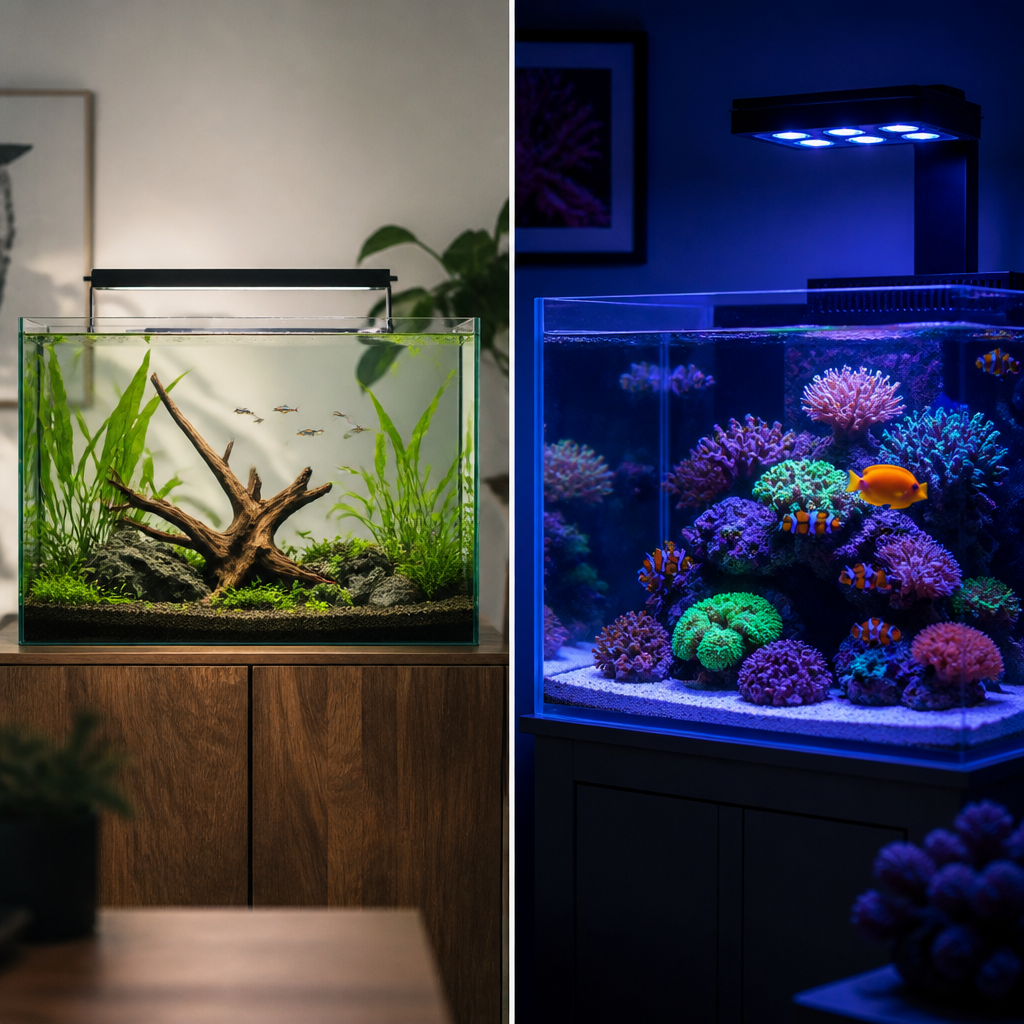
Setting up your first aquarium in Australia is genuinely exciting, but the choice between a marine aquarium and a freshwater setup is one that catches many new hobbyists off guard. Get it wrong and you're either bored within a year or buried in equipment costs you weren't prepared for. The short answer: freshwater is more forgiving and cheaper to enter, while a marine aquarium rewards patience with colour and complexity that freshwater simply cannot match. This guide breaks down exactly what each path demands so you can make a clear-eyed decision before spending a cent.
Table of Contents
- Quick Takeaways
- The Real Cost Difference
- Maintenance Demands: What Your Weekly Schedule Looks Like
- Livestock Options for Australian Hobbyists
- Water Chemistry: Where Most Beginners Struggle
- Side-by-Side Comparison
- Which Setup Actually Suits You?
- Finding Aquatic Pets and Supplies in Australia
- Frequently Asked Questions
- References
Quick Takeaways
| Key Insight | Explanation |
|---|---|
| Freshwater is the smarter entry point | Lower setup costs, a shorter learning curve, and more tolerant livestock make freshwater the right first step for most new Australian hobbyists. |
| Marine tanks cost significantly more upfront | A basic marine setup in Australia typically requires a protein skimmer, live rock, and specific lighting, pushing starter costs well above a comparable freshwater tank. |
| Water stability is non-negotiable in marine systems | Small shifts in salinity, pH, or temperature that a freshwater fish might tolerate can cause rapid decline in marine fish and corals. |
| Australian native freshwater fish are an underrated option | Species like rainbowfish, empire gudgeons, and Murray cod offer colour and personality with adaptability to local tap water conditions. |
| Reef tanks are a separate commitment from fish-only marine tanks | Adding corals to a marine system multiplies complexity, lighting requirements, and water parameter demands considerably. |
| Tank size matters more in saltwater systems | Smaller saltwater tanks amplify water quality swings, making them harder to stabilise. Bigger volumes buffer fluctuations more effectively. |
| Ongoing running costs differ substantially | Marine systems incur regular costs for marine salt mix, specialised supplements, and more frequent equipment maintenance that freshwater tanks simply do not require. |
Before diving into the detail, one thing is worth stating plainly: neither type of aquarium is objectively better. They suit different lifestyles, budgets, and temperaments. What matters is knowing which one you are actually equipped to sustain, not just which one looks better on a social media feed.
Livestock Options for Australian Hobbyists
Australia's geographic position gives hobbyists access to a genuinely diverse range of aquatic livestock, both native and tropical. The choice of freshwater versus marine shapes which animals are available to you and at what cost.
Freshwater: Native Species Worth Exploring
Australian native freshwater fish represent a large and diverse group that is often overlooked in favour of imported tropicals. Popular native species include rainbowfish, archer fish, Murray cod, saratogas, and tandanus catfish. These fish inhabit environments ranging from freshwater to brackish conditions, and many are easy to keep with a tolerance for varying water quality. Most prefer a neutral to slightly alkaline pH, which aligns well with Australian tap water in many regions.
Empire gudgeons are a particular standout for community tanks: hardy, full of personality, and visually striking. Murray rainbowfish and crimson-spotted rainbowfish are excellent choices for hobbyists in southern states, with the Murray rainbowfish showing especially good tolerance for cooler water temperatures. In tropical areas of northern Australia, a broader range of native rainbowfish species are suitable.
Marine: Colour and Complexity
Few freshwater fish can rival the colour intensity found in many marine species. Marine systems open the door to fish like clownfish, dottybacks, gobies, and tangs, as well as the option to keep corals, which create living structural displays unlike anything achievable in freshwater. Reef aquariums built around stony and soft corals are a major draw for serious hobbyists precisely because of this visual impact.
The trade-off is cost and sensitivity. Marine fish and invertebrates are considerably more expensive than freshwater livestock, and their tolerance for water quality lapses is much narrower. A fish that costs $15 in freshwater might have a marine equivalent priced at $60 or more.
Water Chemistry: Where Most Beginners Struggle
This is the section that separates hobbyists who stick with the aquarium for years from those who give up within a few months. Water chemistry is non-negotiable in both setups, but the margin for error is vastly different.
Freshwater Parameters
Freshwater fish generally tolerate a reasonable range of temperature, pH, and hardness depending on the species. Tropical freshwater fish typically prefer a pH between 6.5 and 7.5 and temperatures between 24 and 28 degrees Celsius. The key parameters to monitor are ammonia, nitrite, nitrate, and pH. Regular partial water changes handle most parameter management without needing supplements or additives.
Marine Parameters: A More Demanding Checklist
Saltwater systems require stable conditions across a longer list of parameters. Salinity should be maintained at a specific gravity of approximately 1.023 to 1.025 for a reef tank. pH in a saltwater system ideally sits between 8.1 and 8.3 for optimal coral health. Beyond the basics, reef keepers must also monitor calcium, alkalinity, and magnesium to support coral growth and skeletal formation.
Large shifts in pH stress aquatic organisms and disrupt biological processes, especially in a reef system. The practical implication is that marine hobbyists need a more complete test kit, need to test more frequently, and need to act on results more quickly than freshwater hobbyists typically do.
Understanding water chemistry is not optional in a reef tank. There are at least ten major parameters that need to be understood and managed if long-term success is to be achieved. Salinity and temperature are the first two building blocks, and keeping them stable is the foundation everything else rests on.
Side-by-Side Comparison
The table below compares three realistic paths into the aquarium hobby in Australia: a freshwater community tank, a fish-only marine tank, and a reef aquarium. These represent the three most common starting points for new hobbyists.
| Factor | Freshwater Community Tank | Fish-Only Marine Tank | Reef Aquarium |
|---|---|---|---|
| Typical starter cost (AUD) | $200 to $600 | $800 to $2,000+ | $2,000 to $5,000+ |
| Weekly time commitment | 30 to 60 minutes | 60 to 90 minutes | 90 minutes to 3+ hours |
| Key parameters to monitor | Ammonia, nitrite, nitrate, pH | Salinity, ammonia, nitrite, nitrate, pH | Salinity, pH, calcium, alkalinity, magnesium, nitrate, phosphate |
| Livestock cost | Low to moderate | Moderate to high | High to very high |
| Recommended minimum tank size | 60 litres | 200 litres | 250 litres+ |
| Suitable for complete beginners | Yes | With research | No, experience strongly recommended |
| Australian native species available | Yes, widely available | Some, limited range | Corals and invertebrates, limited fish |
Which Setup Actually Suits You?
The honest answer depends on three things: your available budget, the time you can realistically commit each week, and your tolerance for a learning curve that involves some livestock losses along the way. Marine aquariums are not more rewarding by default. They are more rewarding for people who are genuinely interested in water chemistry, equipment management, and the long game of building a stable ecosystem.
If you are motivated primarily by the visual result and want something beautiful on your wall or in your living room without years of study, a well-planted freshwater tank with native Australian fish or quality tropical species can be stunning. If you are drawn to the idea of a living coral reef, accept that you are committing to an ongoing education in chemistry, biology, and equipment maintenance.
Who Should Start with Freshwater
Start with freshwater if you are new to the hobby, working with a limited budget, or unsure how much time you can consistently give to tank maintenance. Freshwater also makes more sense if you have children involved, since it is far more forgiving of the inevitable beginner mistakes. Australian native species in particular offer a rewarding combination of character and resilience that imported tropicals sometimes do not.
Who Should Consider Marine
Consider a marine setup if you have successfully maintained a freshwater tank for at least twelve months, have a realistic budget of $1,500 AUD or more for setup, and are willing to invest time in understanding water chemistry. Starting with a fish-only marine tank before progressing to a reef system is a sensible intermediate step that many experienced hobbyists recommend.
Finding Aquatic Pets and Supplies in Australia
One of the practical challenges for Australian hobbyists is finding quality livestock and equipment through reliable channels. Pet stores vary widely in the quality of their stock and the accuracy of their advice, which makes peer communities and specialist marketplaces valuable resources. Sourcing aquatic pets from sellers who can provide health history, breeding information, or responsible rehoming context makes a genuine difference to long-term success.
MateLoop is Australia's dedicated pet marketplace connecting hobbyists with breeders, sellers, and adopters of aquatic pets alongside supplies and live plants. Whether you are searching for Australian native freshwater fish for a community tank, specialist marine species, or the live plants that make a planted freshwater tank come alive, a focused aquatic marketplace saves time and connects you with sellers who understand what they are listing. Browsing live fish listings and live plants on MateLoop gives Australian hobbyists a local alternative to generic classifieds that rarely offer species-specific knowledge.
The advantage of a specialist platform over general classifieds like Gumtree or Trading Post is context. A seller listing rainbowfish on a pet-specific platform is far more likely to be able to answer questions about water parameters, tank compatibility, and feeding than a generalist listing mixed in with furniture and cars.
Frequently Asked Questions
Is a marine aquarium worth it for a complete beginner in Australia?
In most cases, no. Marine aquariums involve significantly more equipment, higher upfront costs, stricter water parameter management, and less tolerance for beginner mistakes. Starting with a freshwater tank, building confidence and understanding of the nitrogen cycle, water chemistry, and livestock care, then transitioning to marine after twelve or more months is the approach most experienced hobbyists recommend.
What is the minimum tank size for a saltwater aquarium in Australia?
A fish-only marine tank should realistically be at least 200 litres to provide enough water volume to buffer against parameter swings. Smaller saltwater tanks amplify water quality fluctuations, making them significantly harder to stabilise. For a reef tank with corals, 250 litres and above is a more practical starting point.
Can I keep Australian native fish in a freshwater aquarium?
Yes, and they are an excellent choice. Species like Murray rainbowfish, empire gudgeons, crimson-spotted rainbowfish, and archer fish adapt well to aquarium life and often tolerate treated Australian tap water conditions more readily than some imported tropical species. Most native freshwater fish prefer a neutral to slightly alkaline pH, are generally easy to feed, and add genuine character to a community tank.
How much does it cost per month to run a saltwater aquarium in Australia?
Monthly running costs for a saltwater aquarium vary by tank size and stocking level, but industry estimates suggest a rough budget of around $25 to $100 per month for consumables and utilities, before accounting for the cost of new fish, corals, or invertebrates. Freshwater tanks cost considerably less on an ongoing basis because they do not require marine salt mix, specialised supplements, or the same frequency of equipment maintenance.
What is a protein skimmer and do I need one?
A protein skimmer is a piece of equipment used in saltwater aquariums to remove dissolved organic waste before it breaks down and contributes to ammonia and nitrate levels. It works alongside biological filtration rather than replacing it. For a marine aquarium, a protein skimmer is considered essential by most experienced hobbyists. Freshwater tanks do not require protein skimmers.
Where can I buy aquatic fish and live plants in Australia?
Beyond local fish stores, specialist online marketplaces are a practical option for Australian hobbyists looking for specific species, native fish, live plants, or aquarium supplies. MateLoop is an Australian pet marketplace with dedicated listings for live fish, live plants, and aquatic supplies, connecting buyers directly with sellers who specialise in aquatic animals rather than listing everything from cars to couches.
Have you made the switch from freshwater to marine, or are you weighing up the decision right now? Share your experience or questions in the comments below, we would love to hear what the Australian aquarium community is thinking.
References
- Freshwater vs saltwater aquarium guide covering costs, livestock, and maintenance complexity
- Detailed breakdown of what it costs to buy, equip, and run a saltwater aquarium
- Australian native fish species guide for freshwater aquarium keeping
- Water parameters guide for saltwater aquarium keeping including pH and salinity targets
- PetMD overview of the differences between freshwater and saltwater aquarium setups
General pet care information for Australia. Always follow your veterinarian’s advice for your individual pet.