
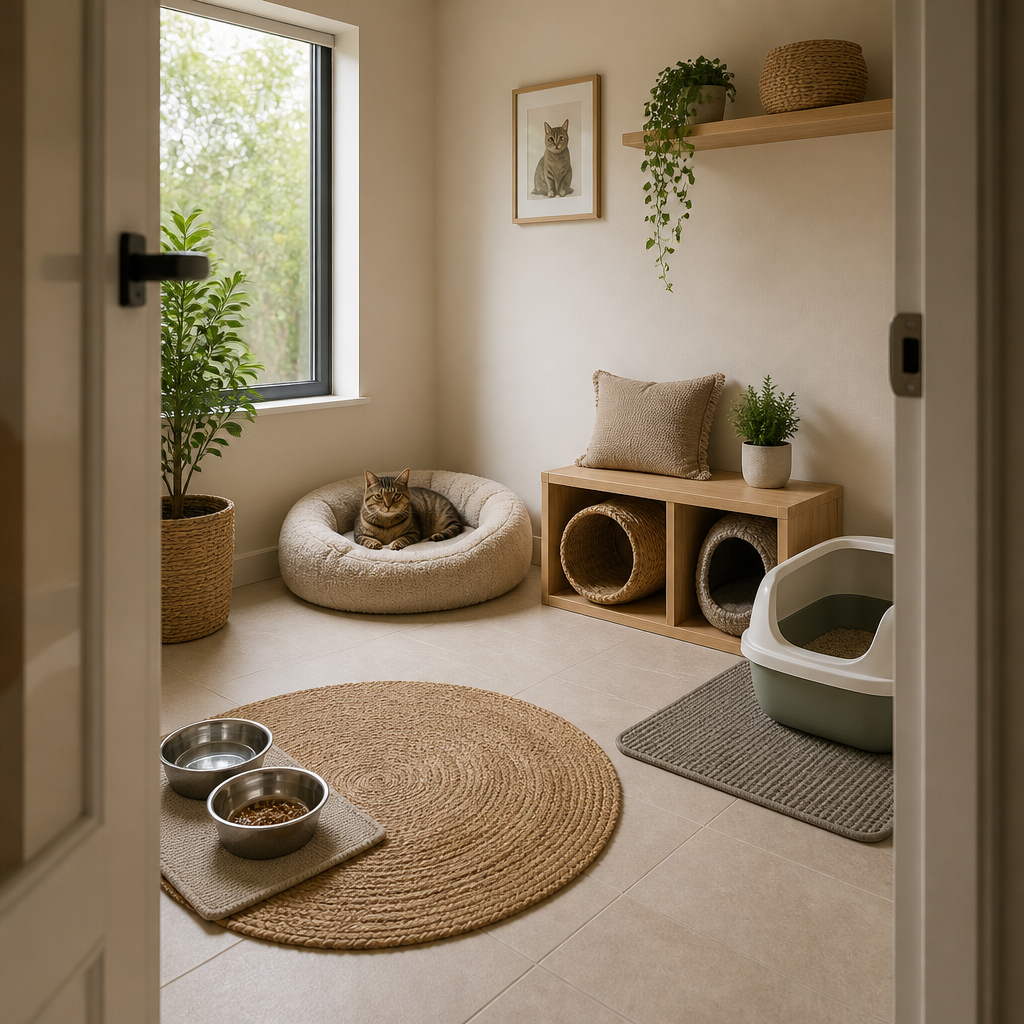
Bringing a new cat home is exciting. What happens next often is not. Your resident dog paces the hallway, your existing cat hisses from behind the couch, and your hopeful new arrival is too stressed to eat. This is the reality of introducing a new cat to pets in Australia, and it catches even experienced pet owners off guard. The good news is that most multi-pet households reach a workable peace, and many reach genuine warmth, but only when the introduction is deliberate and paced correctly. Rush it, and you risk setting up months of conflict that is very hard to undo.
Table of Contents
- Quick Takeaways
- Before the Cat Arrives: Setting Up for Success
- Introducing a New Cat to Your Existing Cat
- Introducing a New Cat to Your Dog
- Introducing a New Cat to Small or Aquatic Pets
- Common Mistakes That Set Introductions Back
- Introduction Approaches Compared
- Frequently Asked Questions
- References
Quick Takeaways
| Key Insight | Explanation |
|---|---|
| Separate rooms first, always | Your new cat needs a dedicated transition room with food, water, litter, and a hiding spot. No contact with resident pets on day one. |
| Scent before sight | Cats and dogs process territory through smell. Swap bedding between animals before any face-to-face meeting to reduce aggression. |
| The process takes weeks, not days | Be prepared for the introduction to take weeks to months. Rushing is the most common reason introductions fail. |
| Vertical space is a cat's safety valve | Cat towers, shelves, and high perches give your new cat an escape route from dogs or dominant cats, reducing stress significantly. |
| Hissing is not a dealbreaker | A single hiss is communication, not a verdict. Ongoing physical fighting or one animal refusing to eat is the real warning sign. |
| Never punish stress behaviour | Growling, hissing, or hiding are stress responses. Punishment adds anxiety to an already tense situation and makes outcomes worse. |
| Separate feeding zones are non-negotiable | Feed cats and dogs in separate areas. Competition over food is a fast track to entrenched conflict between animals. |
Before the Cat Arrives: Setting Up for Success
The preparation you do before your new cat sets a paw inside your home determines how the first week goes. This is not something to figure out on the day. Whether you are adopting from a rescue, buying from a registered breeder, or rehoming a cat through a platform like MateLoop, the moment you confirm your new cat is coming home, start preparing your space.
Choose one room to serve as the new cat's transition space. It needs a litter tray, food, water, a comfortable hiding spot, and ideally an elevated perch. This is the cat's entire world for the first few days. Do not let them roam the house freely on arrival. The goal is to let them decompress without being overwhelmed by new smells, sounds, and the presence of resident animals.
Before the cat even arrives, consider your resident animals. Think about your existing dog's temperament and personality and how they might respond to a cat. If a dog shows signs of predatory aggression, bringing a cat home may not be safe, and a conversation with your vet before committing is worthwhile. For existing cats, older cats are generally less energetic than young kittens, so if you already have senior pets, an adult cat with a calmer temperament tends to integrate more easily than a boisterous kitten.
Pro tip: If you are sourcing your cat through MateLoop's listings, check the listing details carefully. Sellers and rescue organisations often note whether a cat has previously lived with dogs or other cats, which is genuinely useful information when planning your introduction strategy.
Introducing a New Cat to Small or Aquatic Pets
If your household includes small animals like rabbits, guinea pigs, or birds, or if you keep aquatic pets, the calculus changes again. Cats are natural hunters, and no amount of socialisation will fully override that instinct when a small animal moves suddenly. Management here is largely structural rather than behavioural.
Small animals need enclosures the cat simply cannot breach. Rabbits and guinea pigs should be housed in secure hutches with solid latches, not just resting lids. Birds need cages the cat cannot tip or open. Never leave a cat unattended in the same room as a small animal, even once the cat appears calm and disinterested. A calm cat can become a hunting cat the moment a small animal darts unexpectedly.
For those who keep aquariums and live aquatic setups, which MateLoop's marketplace covers as a category, a secure aquarium lid is essential. Cats are drawn to fish movement and will dip a paw in given the opportunity, stressing the fish and risking the stability of the tank. A tight-fitting mesh or glass lid solves this without sacrificing airflow.
Common Mistakes That Set Introductions Back
After years of observing how Australian pet owners navigate multi-pet introductions, the same errors appear repeatedly. Knowing what not to do is as important as following the right steps.
Skipping the transition room entirely. Some owners let the new cat out of the carrier and expect everything to work itself out. It rarely does. The new cat is overwhelmed, the resident animals are alarmed, and the first impression is chaotic. That chaotic first impression is surprisingly hard to reset.
Moving too fast through the stages is the other major failure point. If both cats seem merely tolerant at the barrier, that is not a green light for unsupervised cohabitation. Tolerance under managed conditions is not the same as relaxed coexistence in a shared space. In practice, the temptation to speed things up is strong, especially when the process feels like it is going well. Resist it.
A common mistake is also feeding all animals in the same location during the introduction period. Food is a resource cats and dogs actively guard. Feeding in the same spot creates competition where there does not need to be any. Separate the feeding zones permanently, not just during introductions.
Finally, do not rely solely on the existing pets to "sort it out." Some cats will reach a detente on their own, but leaving them unsupervised before they are ready risks an injury or a deeply entrenched negative association that can take months to unwind, if it unwinds at all.
Introduction Approaches Compared
| Approach | Best For | Main Risk |
|---|---|---|
| Gradual Staged Introduction (separate room, scent swap, barrier, then physical) | All multi-pet households, especially with existing cats or high-prey-drive dogs | Requires patience and consistent follow-through across weeks to months |
| Scent-Only Swap (no visual contact until full comfort with scent) | Households with a resident cat that is known to be territorial or anxious | Can extend the timeline significantly if one cat is very slow to accept new scents |
| Barrier-Led Introduction (screen door or baby gate from day one, skipping room isolation) | Very confident or social cats being introduced to a calm, cat-experienced dog | Can overwhelm a nervous new cat before they have decompressed; higher risk of a bad first impression |
In practice, the gradual staged introduction is the right default for almost every Australian household. The other approaches suit specific situations and experienced owners who can accurately read animal body language. If you are not confident reading whether your dog is curious or fixated, or whether your cat is stressed or just grumpy, default to the slowest approach.
Frequently Asked Questions
How long does it take to introduce a new cat to existing pets in Australia?
There is no fixed timeline, but a realistic minimum for cat-to-cat introductions is two to four weeks before supervised physical contact, with full relaxed coexistence potentially taking several months. Cat-to-dog introductions often move faster if the dog is calm and crate trained, but some households take longer. Be prepared for the process to take weeks to months, and pace progress by the animal showing the most stress.
Is hissing normal during a cat introduction?
Yes, hissing is normal and expected, particularly in the first few days of scent exposure and early visual contact. It is a communication signal, not a verdict on compatibility. The concern is sustained physical fighting, one animal refusing to eat, or extreme hiding that does not reduce over time. If hissing continues beyond a week at the barrier stage without any sign of settling, slow the process down and extend the scent-swapping phase.
Should I let the new cat and existing dog meet off-lead?
Not early on. Your dog should be on a lead for all initial physical introductions with your new cat, regardless of how calm your dog normally is. A dog acting out of excitement can injure a cat without intending harm. Only progress to off-lead interaction once your dog has demonstrated calm, consistent behaviour across multiple supervised on-lead sessions, and the cat is no longer hiding or showing sustained stress.
Do I need separate litter trays for multiple cats?
Yes. The general rule for multi-cat households is one litter tray per cat, plus one extra. So two cats need at least three trays. Place trays in different locations so a dominant cat cannot block access to all of them. Competition over litter tray access is a direct cause of inappropriate elimination, which is much harder to resolve than preventing it in the first place.
What if my existing cat becomes more aggressive toward me during the introduction?
This is a recognised stress response. When cats are stressed by a new animal in their territory, they can redirect that anxiety toward the nearest available target, including their owners. Do not punish this behaviour. Give your resident cat extra positive attention in spaces the new cat has not yet accessed, maintain their routine as closely as possible, and consider talking to your vet about short-term calming support if the aggression is severe or sustained.
Can I use pheromone products to help the introduction?
Synthetic pheromone diffusers designed for multi-cat households are widely used by veterinary clinics and rescue shelters to reduce stress during introductions. They work by releasing a calming synthetic pheromone into the air rather than as a surface spot application. Use the diffuser in the area where introductions are taking place. These products are available through Australian pet retailers and are worth using as a support tool, though they work best alongside a structured gradual introduction rather than as a replacement for one.
Where can I find cats available for adoption in Australia with known pet histories?
Rescue organisations and shelters often hold information about whether a cat has previously lived with dogs or other cats. If you are looking for a cat that is more likely to integrate smoothly into your multi-pet home, checking MateLoop's cat listings and adoption section is a practical starting point. Many rescue listings include temperament notes that can help you match a cat to your existing household dynamics before committing.
If you have recently introduced a new cat to your existing pets in Australia, share what worked for you in the comments. Your experience could save another pet owner weeks of unnecessary stress.
We would love your feedback and any insights you would share with others. What perspective would you add?
References
- RSPCA Australia knowledge base: how to introduce a new cat or kitten to your existing cat
- RSPCA Australia knowledge base: how to introduce a new cat or kitten to your family dog
- RSPCA Australia blog: introducing your new cat to the family dog, step-by-step tips
- Pet Circle Australia: vet guide to introducing a new cat to your household
- Animal Welfare League: how to introduce a new pet to your existing pets
General pet care information for Australia. Always follow your veterinarian’s advice for your individual pet.