
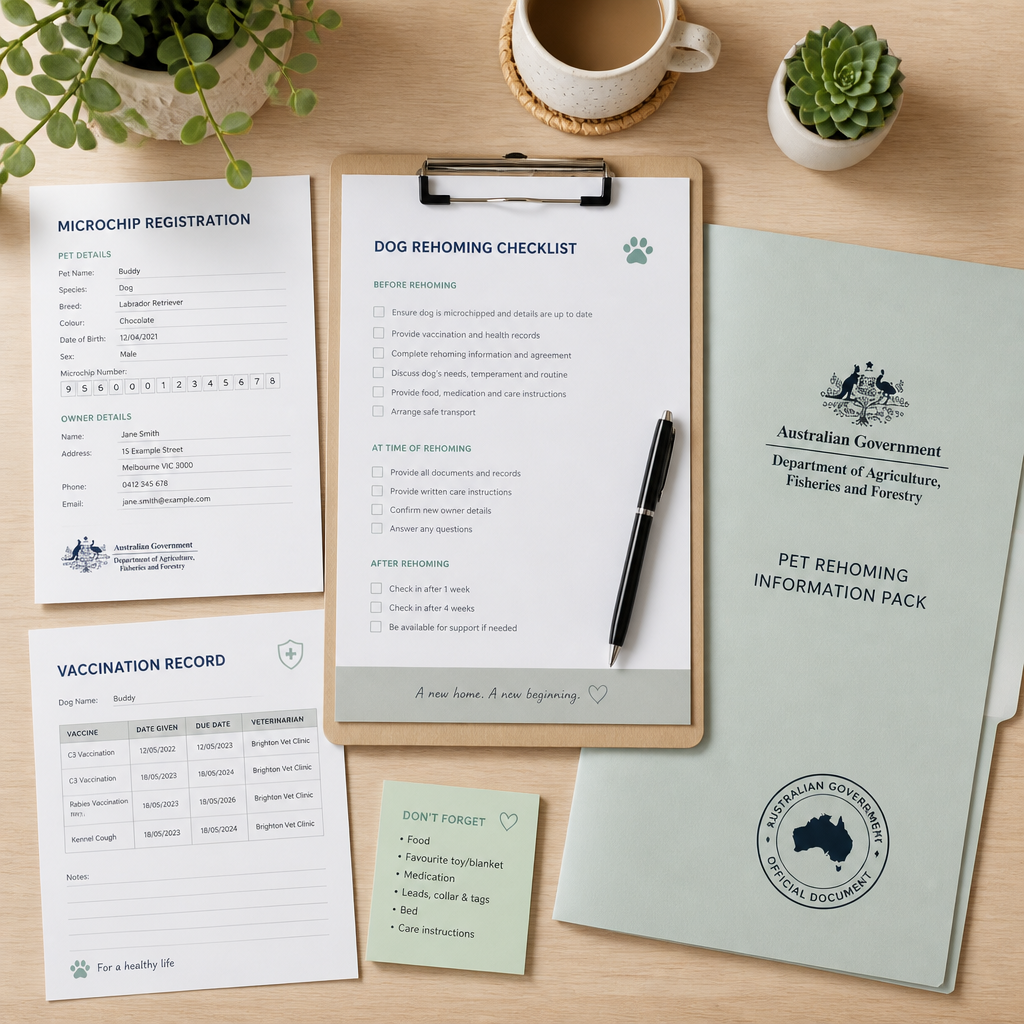
Every year, thousands of dogs across Australia are rehomed under rushed, poorly planned circumstances, and the dog pays the price. Whether you are moving interstate, dealing with a new allergy in the family, or simply cannot give your dog the life it deserves, rehoming a dog in Australia is a serious responsibility, not just a transaction to complete as fast as possible. Done right, it protects the dog, protects you legally, and gives the new owner a genuine chance at success. Done badly, it puts dogs at risk of cycling through multiple homes, landing in a shelter, or worse. This checklist walks you through every step, from the paperwork to the handover conversation, so you can rehome with confidence.
Table of Contents
- Quick Takeaways
- Why Responsible Rehoming Matters in Australia
- Legal Requirements Before You List
- Writing an Honest Rehoming Listing
- Screening Potential New Owners
- Rehoming Options Compared
- Preparing Your Dog for the Transition
- The Handover Day Checklist
- Frequently Asked Questions
- References
Quick Takeaways
| Key Insight | Explanation |
|---|---|
| Update microchip details before transfer | Your dog's microchip must be linked to the new owner's details promptly after rehoming. In most Australian states, you are legally required to notify the relevant microchip registry of the ownership change. |
| Transfer council registration within 14 days | In NSW and many other states, the previous owner must submit a change-of-owner form to the local council within 14 days of transferring the dog. Failing to do this leaves you legally exposed. |
| Screen every applicant, not just the first one | The first person to reply is rarely the best match. Collect multiple applications, ask consistent questions, and verify vet references before making a decision. |
| Be brutally honest in your listing | Listing your dog as "good with kids" when that is not fully true leads to failed placements. Disclose any known behaviour quirks, training gaps, or health conditions upfront. |
| Include a rehoming fee to deter unsuitable homes | A modest rehoming fee filters out impulse inquiries and signals to the new owner that the dog has value. It also discourages people seeking dogs for exploitation. |
| Provide full medical records at handover | Hand over vaccination history, vet contact details, microchip paperwork, and any medication or behavioural notes so the new owner can pick up care exactly where you left off. |
| A trial period protects the dog | Offering a short trial period with a clear return agreement means the dog comes back to you if the placement fails, rather than being passed on to a stranger again. |
Why Responsible Rehoming Matters in Australia
Australian shelters and rescue organisations receive a significant number of dogs that were privately rehomed without proper screening, only to fail in their new home within weeks or months. The cycle of repeated rehoming is one of the most damaging things that can happen to a dog's long-term behaviour and wellbeing. Each move increases anxiety, erodes trust, and can entrench fear-based responses that make the dog harder to place again.
Responsible rehoming is also about protecting yourself. Once you transfer ownership of a dog in Australia, the new owner inherits the legal responsibilities of registration, council compliance, and any liability for the dog's actions. But until that transfer is formally completed, you may still be considered the legal owner in your state or territory. That is a real legal risk that many people do not consider when they post a quick listing and hand the dog to the first person who shows up.
Platforms like MateLoop are specifically designed to support responsible private rehoming in Australia, connecting you with genuine prospective owners who are actively searching for dogs, rather than the general-purpose classifieds sites that attract impulse browsers. Listing on a dedicated pet marketplace means your post reaches people who already understand what pet ownership involves.
Rehoming Options Compared
Not every situation calls for the same rehoming approach. The table below compares the three main options available to dog owners in Australia so you can choose the one that fits your dog's needs and your circumstances.
| Rehoming Method | Best For | Key Considerations |
|---|---|---|
| Private rehoming via a dedicated pet marketplace (e.g. MateLoop) | Dogs with a known history and temperament, owners who want control over who the dog goes to | Reaches genuine pet-focused audience; you manage the screening process yourself; fastest route to a matched home when done well |
| Surrender to a rescue organisation or shelter | Dogs with complex behavioural needs, owners who cannot manage the screening process due to time or personal circumstances | You relinquish control of placement; organisations like RSPCA or breed-specific rescues typically screen adopters carefully; may have wait lists or acceptance criteria |
| Rehoming through a breed club or RPBA-affiliated breeder | Purebred dogs whose breeders have a lifetime rehoming commitment | RPBA members are committed to rehoming pets they bred at any point in the dog's life; best option if you bought from a responsible registered breeder; often the smoothest process for purebred dogs |
In practice, private rehoming via a dedicated Australian pet marketplace gives you the most control and typically the fastest outcome for a healthy, well-adjusted dog. Rescue organisations are the better route when the dog has significant behavioural or medical challenges that need professional assessment before placement. Contacting the original breeder should always be your first call if you bought from a registered, responsible breeder.
Preparing Your Dog for the Transition
Dogs do not understand what is happening during a rehoming. What they experience is a sudden change in environment, routine, and the people around them. The more you can do before handover to reduce that shock, the better the transition will go.
Vet Check Before Rehoming
Book a vet check in the weeks before you plan to rehome. This serves two purposes. First, it gives you an up-to-date health record to hand over, which new owners genuinely appreciate. Second, it surfaces any health issues you may not have been aware of, so the new owner is not dealing with an unexpected vet bill within days of collection. A dog with untreated dental disease, a skin infection, or an early joint issue deserves to have those things addressed or at least disclosed before the transfer.
Documenting Routine and Behaviour
Write out the dog's daily routine in plain language: feeding times and amounts, preferred exercise, sleep location, any commands it knows, and any triggers that cause stress or reactivity. This document is one of the most practical things you can hand over at collection. New owners often underestimate how disorienting it is to take on an adult dog without this information, and a clear written summary reduces the chance of a placement breaking down in the first week.
Familiar Items at Handover
Send a familiar blanket, toy, or bed with the dog. The scent of a familiar object genuinely helps dogs settle in a new environment. It costs you nothing and makes a meaningful difference to the dog's first few days in a new home.
The Handover Day Checklist
The day of handover is where all the preparation either holds together or falls apart. Run through this checklist before the new owner arrives or before you drive to their home.
Documents to hand over:
- Vaccination certificate (or vet record showing vaccination history)
- Microchip certificate and details of the registry where the chip is recorded
- Council registration papers (or confirmation that you have notified the council of the transfer)
- Any vet records relating to past treatments, surgeries, or ongoing conditions
- Written routine and behaviour summary
- Current food details (brand, daily amount, feeding frequency)
- Contact details for your vet so the new owner can request a full history transfer
Actions to confirm on the day:
- Confirm the new owner understands how to update the microchip registry in their state
- Confirm the new owner understands their obligation to register the dog with their local council
- Agree on a check-in timeline (a message at 48 hours and again at two weeks is reasonable)
- Confirm the return agreement if you have offered a trial period
A common mistake at handover is rushing through these steps because the emotional side of saying goodbye takes over. Schedule the handover at a time when you are not rushed, hand everything over methodically, and make sure the new owner leaves with no unanswered questions. That brief extra care is what separates a responsible rehoming from simply passing the dog on and hoping for the best.
If you are listing your dog for rehoming or looking for your next pet, MateLoop is built specifically for Australian pet owners who want to connect with a community that takes pet welfare seriously.
Frequently Asked Questions
Do I need to notify my local council when I rehome my dog?
Yes, in most Australian states and territories you are required to notify your local council when you transfer ownership of a registered dog. In NSW, the previous owner must submit a change-of-owner form within 14 days of the transfer. The new owner then registers the dog in their own name. Rules vary by state, so check your specific council's requirements before handover.
Is it legal to charge a rehoming fee for my dog in Australia?
Yes, it is legal to charge a rehoming fee for a privately owned dog in Australia. A reasonable fee is actually encouraged by many rescue professionals because it filters out impulse inquiries and signals that the dog has value. The fee should be modest and clearly stated in your listing. It is not a sale price in the commercial sense but a contribution to cover the costs of vet care, vaccinations, and the process of responsible rehoming.
What happens if the new owner cannot keep the dog after I have transferred it?
If you included a return agreement in your rehoming arrangement, the dog should come back to you rather than being passed to a third party without your knowledge. This is why a written return clause is strongly recommended. If you did not include one and the new owner contacts you later, it is still worth accepting the dog back or helping find a new placement, rather than leaving it to be surrendered to a shelter by a stranger.
Do I need to desex my dog before rehoming it?
Desexing is not legally required before rehoming in most Australian states, but it is strongly recommended. A desexed dog is generally easier to rehome, reduces the risk of unplanned litters in the new home, and signals to prospective adopters that you have taken the dog's welfare seriously. Some councils offer discounted registration fees for desexed animals, which can be an added benefit for the new owner.
What should I do if I cannot find a suitable home for my dog?
If you have been advertising responsibly for several weeks without finding a suitable match, contact a breed-specific rescue organisation or your state RSPCA. Many rescues will work with you to find a placement even if they cannot take the dog into their own care immediately. If you originally purchased the dog from a registered breeder affiliated with Dogs Australia or the RPBA, contact that breeder directly. Many responsible breeders are contractually and ethically committed to rehoming pets they bred at any point in the animal's life.
Can I rehome a dog I only fostered or recently adopted myself?
If you fostered the dog through a rescue organisation, you need to return it to that organisation rather than rehoming it privately. The rescue retains legal ownership and responsibility for the placement. If you adopted the dog and now legally own it, you can rehome it privately, but check any adoption agreement you signed, as some organisations include a return clause requiring you to contact them first before rehoming independently.
Have you rehomed a dog in Australia? Share what worked (or what you wish you had done differently) in the comments. Your experience might be exactly what someone else needs to read right now.
References
General pet care information for Australia. Always follow your veterinarian’s advice for your individual pet.