
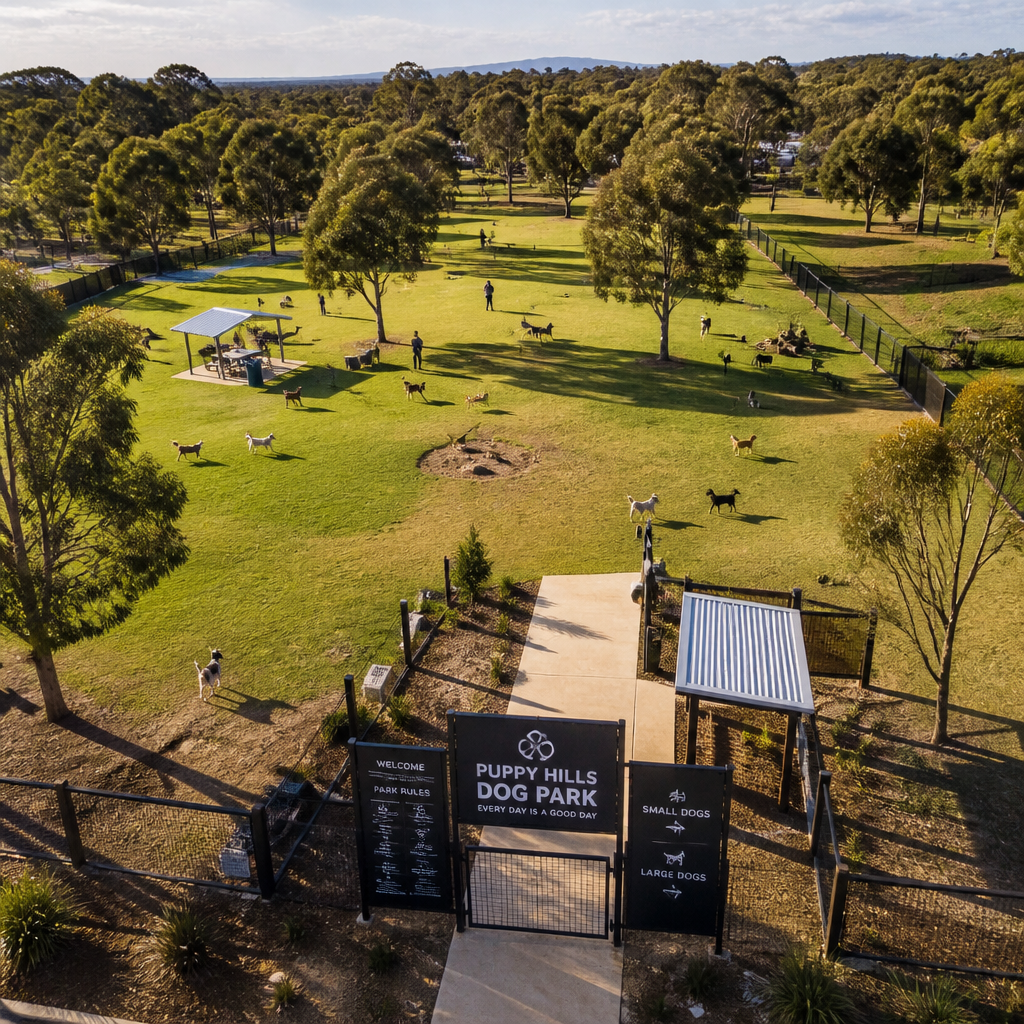
Most dog owners have been there: you arrive at a park, your dog bolts off the lead with pure joy, and thirty seconds later a council ranger is heading your way. Finding legitimate dog parks in Australia is surprisingly confusing. Rules differ between councils, signage is inconsistent, and a quick Google search often returns outdated or flat-out wrong information. This guide cuts through the noise. Whether you are in Sydney, Melbourne, Brisbane, Perth, or anywhere in between, here is exactly how to find off-leash dog areas near you, what to look for when you get there, and how to make sure every visit is a good one for your dog and everyone else's.
Table of Contents
- Quick Takeaways
- How to Find Dog Parks Near You in Australia
- Best Off-Leash Dog Areas by City
- What to Check Before You Visit
- Dog Park Etiquette: The Rules That Actually Matter
- Comparing Your Options: Fenced, Unfenced, and Dog Beaches
- Frequently Asked Questions
- References
Quick Takeaways
| Key Insight | Explanation |
|---|---|
| Use a dedicated dog park finder first | Sites like FindADogPark.com.au list over 5,000 parks organised by state, suburb, and council, with maps and amenity details, saving you from guesswork. |
| Your local council website is the authority | Council pages are the only truly reliable source for current off-leash zone hours, boundaries, and seasonal closures in your area. |
| Fenced does not always mean better | Large unfenced off-leash reserves give confident dogs more space and variety, while fenced parks suit dogs still building recall or socialisation skills. |
| Registration and vaccination are usually required | Most Australian councils require dogs using off-leash areas to be registered, vaccinated, and in some areas desexed or holding a permit. |
| Time of day changes the experience entirely | Early mornings see fewer dogs and calmer energy. Peak times (weekday late afternoons and weekend mornings) can overwhelm anxious or reactive dogs. |
| Dog beaches are a separate category worth knowing | Many coastal councils designate specific beach sections as off-leash. Hours and seasonal restrictions vary widely and change without notice. |
| Reactive dogs need a strategy, not avoidance | Visiting off-peak, scouting the entry area before entering, and leaving before your dog's threshold is reached are practical habits, not last resorts. |
How to Find Dog Parks Near You in Australia
The single biggest mistake Australian dog owners make is assuming a large grassy area is automatically off-leash. It often is not. Off-leash zones are designated by council, marked with signage, and carry genuine fines when ignored. The only way to be certain is to check a reliable source before you go.
Here are the tools that actually work.
FindADogPark.com.au
FindADogPark.com.au is the largest dedicated dog park directory in Australia, listing over 5,000 parks and searchable by state, suburb, or council. Each listing includes an address, map, photos, amenity notes, a council link for verification, and a comments section from other dog owners. It works well on mobile, which matters when you are already in the car. Use this as your starting point for any suburb you are unfamiliar with.
The database is crowd-maintained, so a quick cross-check against your council's own website before visiting a new park is still worth doing.
Your Local Council Website
Every Australian council publishes a parks page, and most now include an interactive map of off-leash areas. Brisbane City Council, for example, maintains over 160 dog off-leash areas and publishes an up-to-date searchable map at their website. The City of Sydney notes that only about 50 of its 400-plus parks allow off-leash activity, but those 50 cover the majority of total park area in the city. Councils update these maps when zones change, which third-party apps do not always catch quickly.
Search "[your council name] off-leash dog parks" and go directly to the council domain. Do not rely on the first commercial result.
The DogPack App
The DogPack app (available on Google Play for Australian users) focuses specifically on finding dog parks and pet-friendly places across Australia, with a community layer that lets owners report closures, hazards, and updates in real time. It is particularly useful when you are travelling interstate and need quick location-aware results.
Pro tip: When you move to a new suburb or are planning a trip, spend five minutes saving three nearby off-leash areas in Google Maps with a custom tag. You will never be stuck scrambling for options on a rainy Tuesday afternoon when your dog has had enough of the backyard.
Before You Enter the Gate
Watch the existing group from outside before entering. If the dogs near the gate are in a boisterous, unsettled cluster, wait until they disperse before bringing your dog in. Entering the gate into a pile of excited dogs is one of the most common triggers for altercations at dog parks. Only visit designated off-leash areas, carry a leash and poop bags at all times, and supervise your dog throughout the visit without getting distracted by your phone.
Reading Your Dog's Signals
If your dog is hanging close to your legs, repeatedly trying to leave, or showing tense body language, the visit should end. The RSPCA's guidance on this is clear: mutual respect between owners and responsiveness to what your dog is telling you are the foundations of park safety. A dog that is not having fun at the park is not failing, and there is no benefit in forcing them to stay.
If another owner's dog is reactive and they ask you to leash your dog temporarily, do it without debate. One unreliable dog is enough to create a dangerous situation regardless of how friendly your dog actually is.
Common Mistakes to Avoid
Do not bring food or treats into a dog park. Even if your dog ignores them, another dog will not. Do not enter an off-leash area with a dog in heat. Do not bring very young puppies into a park with large, boisterous adult dogs. And if your dog shows aggression, leave immediately rather than attempting to manage it in the middle of the group. These are the mistakes that cause the incidents that get dog parks closed by councils.
Comparing Your Options: Fenced, Unfenced, and Dog Beaches
Understanding the practical trade-offs between different types of off-leash areas helps you pick the right environment for your dog on any given day. The table below compares the three main formats you will encounter across Australia.
| Type of Off-Leash Area | Best Suited For | Key Limitations |
|---|---|---|
| Fenced dog park (dedicated enclosure) | Dogs with developing recall, smaller breeds, anxious dogs who benefit from a contained space, owners introducing their dog to social play | Often small in size, can become overcrowded at peak times, limited to one type of environment (grass only, typically) |
| Unfenced off-leash reserve (large council-designated area) | Dogs with solid recall, high-energy breeds needing space to run, owners wanting variety in terrain and walking routes | No physical boundary if recall fails, entry and exit points require more management, can be harder to locate within larger parks |
| Off-leash dog beach | Water-loving breeds, dogs that run hot and benefit from cooling off, socialised dogs comfortable with unpredictable entry points | Highly seasonal restrictions, salt water and sand hygiene considerations, can be busy and chaotic on weekends, council rules vary enormously by suburb |
In practice, the most resilient approach is to have at least one example of each type within driving distance. On a relaxed weekday morning, the large unfenced reserve is ideal. On a public holiday when every park is crowded, a quiet fenced enclosure on the edge of your suburb may be the better call.
Frequently Asked Questions
Are dog parks free to use in Australia?
Yes, the vast majority of off-leash dog parks and designated off-leash areas managed by Australian councils are free to access. Some premium private dog park facilities exist in major cities and may charge a small entry or membership fee, but council-run parks do not charge admission. Your ongoing obligation is to have your dog registered with your local council, which involves an annual registration fee.
How do I find out if a specific park is off-leash near me?
The most reliable method is to search your local council's website directly for an off-leash area map. If you want a broader search across multiple suburbs or are unfamiliar with an area, FindADogPark.com.au lists over 5,000 parks searchable by suburb, state, and council, with maps and facility details. Cross-check any new location against the council source before your first visit.
Can I take my puppy to an off-leash dog park?
You can, but timing and setting matter enormously. Young puppies should not be in large parks with boisterous adult dogs. A small, calm fenced park with one or two other relaxed dogs is a far better first experience. Puppies also need to be vaccinated before exposure to shared dog spaces, so check with your vet about when your puppy's vaccination schedule makes park visits safe. Early positive experiences shape how your dog approaches social settings for life.
What are the rules about picking up after my dog at a dog park?
Picking up after your dog is a legal requirement under most Australian council by-laws, not just a courtesy. Failing to do so can result in on-the-spot fines. Always carry your own waste bags and use them even if the park provides dispensers, because they run out. If a dispenser is empty, report it through your council's website or via an app like SnapSendSolve so it gets refilled.
What should I do if a dog fight breaks out at the park?
Do not put your hands near the dogs' mouths. Make a loud noise to startle the dogs, create distance between them if possible using a physical barrier like a bag or jacket, and get your dog out of the park calmly once they are separated. Do not escalate the situation with the other owner at the park. If your dog is injured, contact your vet immediately. If the other dog is unregistered or its owner is uncooperative, report the incident to your local council's ranger service.
Can I take my dog off-leash on any beach in Australia?
No. Off-leash beach access is designated by individual councils and varies significantly by location, time of year, and time of day. Many Australian beaches have specific off-leash sections that apply only during certain hours, and these restrictions often change seasonally. Always check the relevant council website before taking your dog to a new beach. Assuming a beach is off-leash because it looks quiet is one of the most common ways dog owners receive council infringement notices.
How can I help my dog have a better experience at dog parks?
Start with low-pressure visits during quiet off-peak hours. Keep early visits short and positive, ending them before your dog shows any signs of stress. Practice your recall in a low-distraction environment consistently before relying on it in a busy park. Dogs that struggle socially often improve with gradual, positive exposure rather than being thrown into peak-time chaos. If your dog has persistent anxiety or reactivity around other dogs, working with a qualified trainer before attempting off-leash park visits is a practical investment.
If you have found a hidden-gem dog park in your area that other Aussie dog owners should know about, drop it in the comments below. The best park tips always come from locals.
References
General pet care information for Australia. Always follow your veterinarian’s advice for your individual pet.